
 Deutsch
 English

Background of the Work:
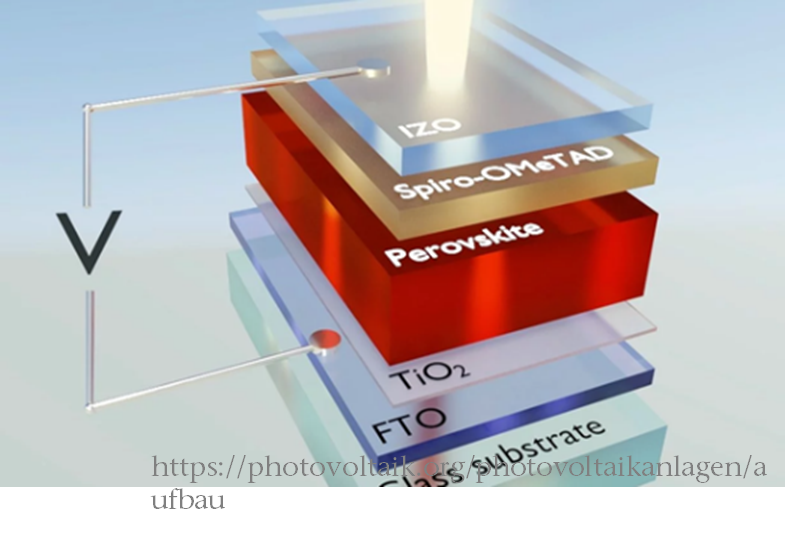
Perovskite-silicon tandem solar cells (PST) are among the most promising developments in photovoltaics in recent years. They are based on materials with a perovskite (Pk) crystal structure and have achieved remarkable efficiency gains in a short period of time. Due to their low-cost fabrication, the ability to process them on flexible substrates, and their suitability for tandem cells with silicon, they are becoming increasingly important.
The fabrication of PST involves various deposition techniques for forming high-quality Pk layers. These processes can be broadly categorized into solution-based methods, vapor-phase-based methods, and hybrid methods that combine both approaches. Each of these methods offers specific advantages while also presenting different technological challenges and varying in terms of their potential environmental impacts.
In order to make reliable statements about the potential environmental impacts associated with the formation of high-quality Pk layers, the various techniques for producing Pk layers must be modeled and evaluated in a life cycle assessment (LCA).
Objective of the thesis:
This thesis aims to conduct a comparative LCA study of various Pk deposition techniques for PST. The focus is on the solution-based method, for which detailed primary data from a real manufacturing process are available. These will be systematically compared with results from the scientific literature to transparently illustrate differences in environmental impacts.
Possible work packages for this thesis could include:
- Research and description of the state of the art in deposition techniques for forming high-quality Pk layers on PST
- Definition of the objectives and scope of the life cycle assessment
- Detailed process description of the deposition techniques under consideration and preparation of the material balance
- Calculation of potential environmental impacts using Umberto 11 LCA software
- Conducting a scenario or sensitivity analysis
- Interpretation of the results and critical evaluation of data quality and methodology in comparison to the literature
- Outlook on reduction potentials across the entire life cycle in the context of a circular economy
Prerequisites:
- Successful completion of the Life Cycle Assessment module, including methodological knowledge of LCA and the Umberto 11 LCA software
- Excellent written and spoken German and English skills
- Ability to work independently and in a structured manner
Scope: Master’s thesis
Start Date: As soon as possible
Information about the work
Type of work: Master's thesis
Start date: immediate, after agreement
Approach: experimental and theoretical
Location: IEVB
Contact person: Dipl.-Umweltwiss. Jan Schlecht